
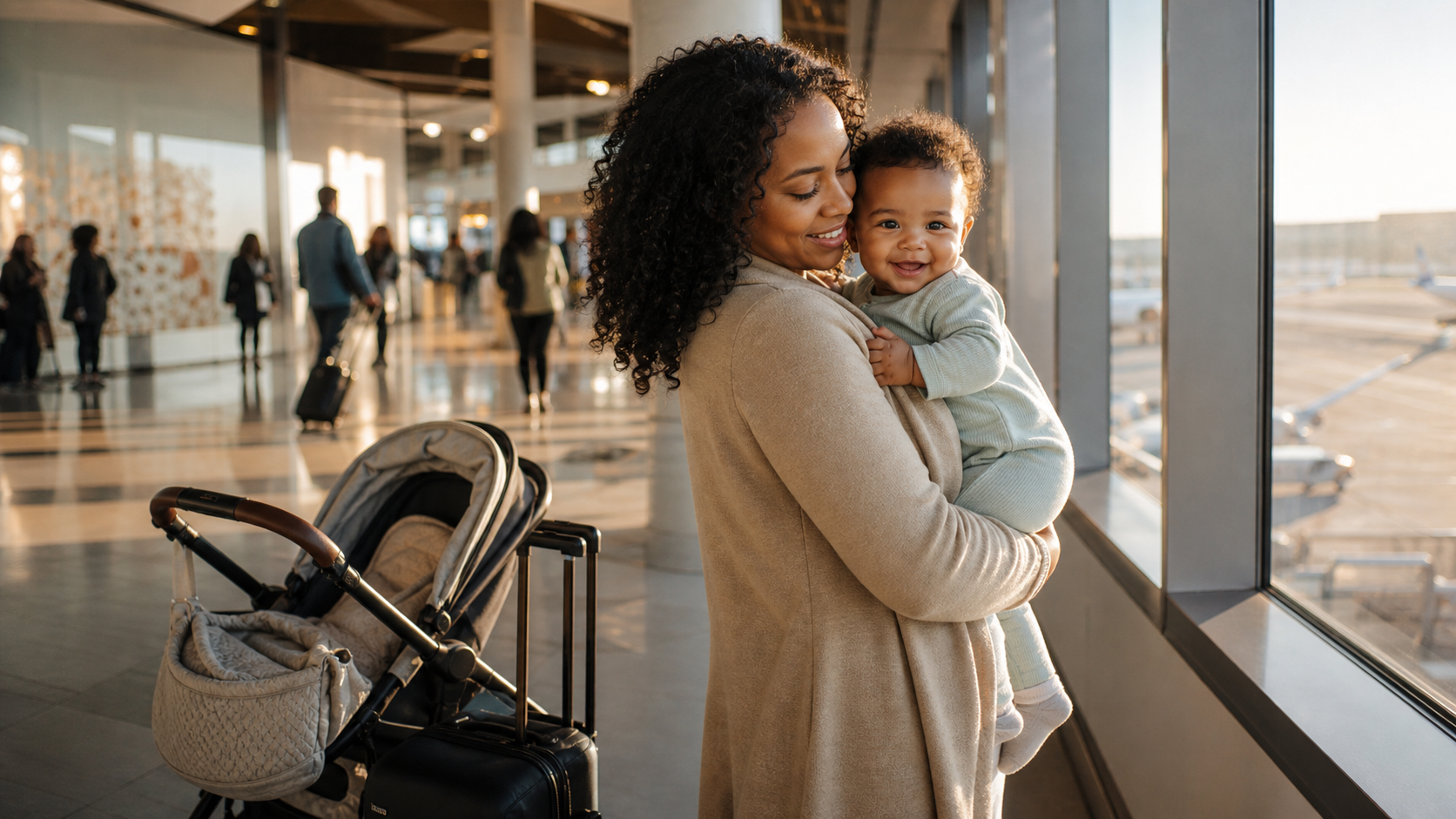
Flying with a baby can feel like a performance you did not rehearse for. The useful news is that babies do not need an elaborate itinerary. They need food, sleep, a dry nappy, and an adult who can stay reasonably calm when the schedule goes sideways.
Book the boring details early
Check your airline’s current rules for lap infants, car seats, bassinets, baggage and identification before booking. Policies vary. If you can buy your baby a seat and use an approved restraint, that is the safest option; the American Academy of Pediatrics also advises checking that a car seat is certified for aircraft use. A window seat is often more protected from passing carts and elbows.
Give yourself more airport time than your pre-baby self would consider necessary. A slow check-in is easier to absorb than sprinting with a baby who has just filled a nappy.
Pack one reachable bag
Bring more nappies and wipes than the optimistic version of you thinks you need, plus a spare top for baby and one for you. Add feeds, a muslin, a small comfort item, a changing mat and one easy distraction. Put them in the bag you can reach from your seat, not the perfectly organised luggage overhead.
If you are combining breast and bottle feeding, practising with the bottle before the trip can reduce one unknown. Our guide to introducing a bottle to a breastfed baby has a low-pressure approach.
Help with take-off and landing
Some babies are bothered by pressure changes. Feeding, offering a bottle, breastfeeding or a pacifier during take-off and descent may help because sucking encourages swallowing. Do not force it if your baby is asleep or uninterested.
Aim for comfortable, not perfect sleep. Keep baby’s face clear and their airway unobstructed. If they sleep on you, stay awake and alert; a plane seat is not a substitute for a safe sleep space.
Do not apologise for having a baby
If your baby cries, respond to your baby. Walk when permitted, offer comfort, change the nappy, and keep your voice low. Most people understand. The few who do not are not the audience for your parenting.
It helps to have a recovery plan for arrival too: no fixed dinner reservation, easy food, and a quiet first evening. Travel can make babies needier for a day or two. The same gentle reassurance that helps with newborn care when you are alone helps here too: meet the basic need in front of you, then take the next small step.