
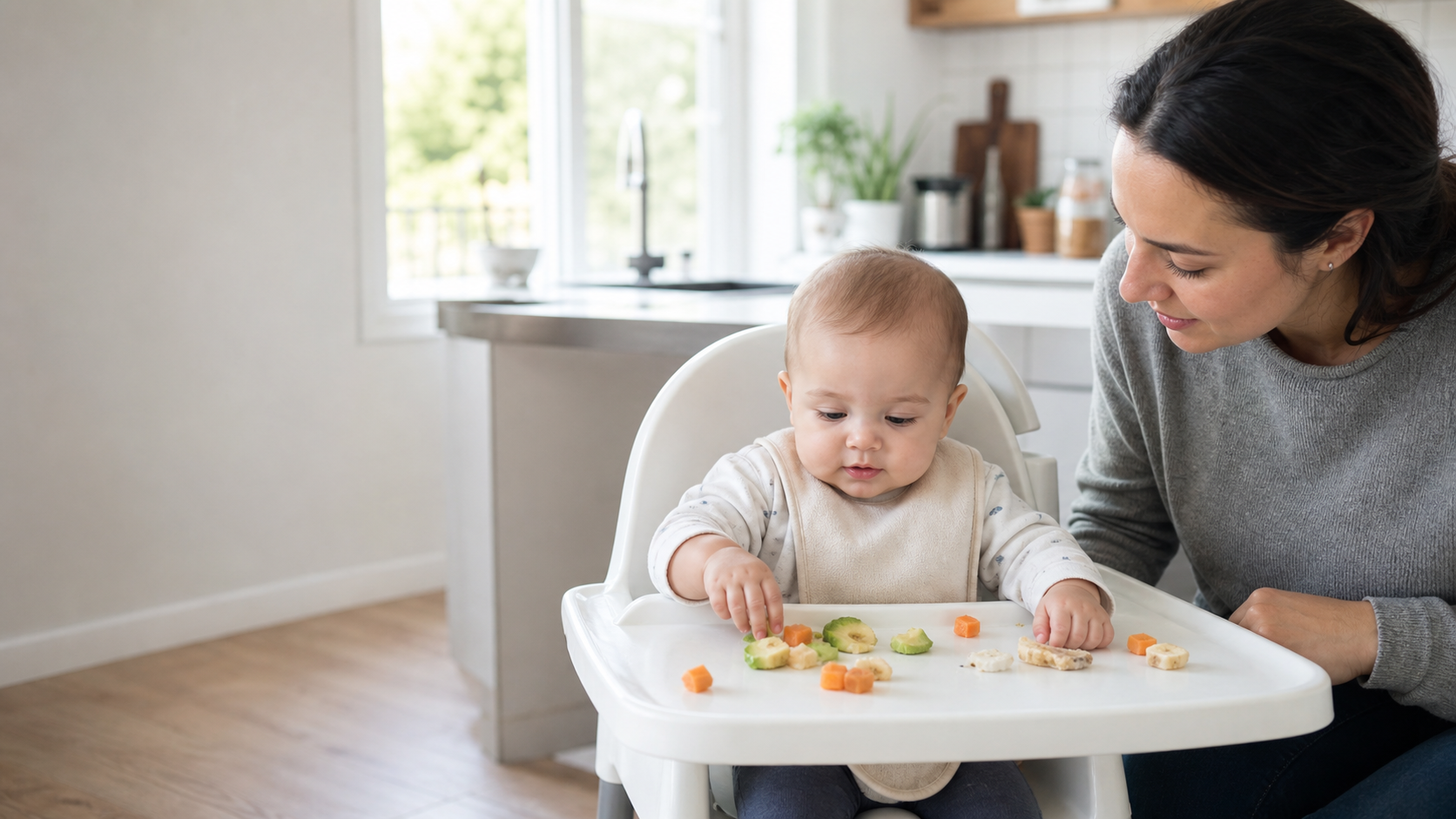
Starting solids can look strangely high stakes online. Purees or finger food. Three-day allergen plans. Tiny spoons. Gagging videos. Most families need a quieter starting point: baby sits safely, shows interest in food, and gets regular chances to explore age-appropriate textures while milk remains their main nutrition.
Look for readiness rather than a calendar alone. Your baby should be able to sit with good head control in a proper high chair, bring objects to their mouth and show interest in food. If you are unsure, ask your child's clinician.
Make the set-up safe first
Sit baby upright and stay with them for the whole meal. Offer soft, graspable food or smooth textures that match their skills. Avoid hard, round, sticky or coin-shaped foods that are choking hazards. Grapes, nuts, popcorn, whole spoonfuls of nut butter and hard raw vegetables need preparation or should wait.
Gagging is noisy and common while babies learn; choking is quiet and needs immediate action. Take an infant first-aid course before you begin if you can. It is one of those boring preparations you are grateful for later.
Start small and repeat
One meal a day is enough at first. Put one or two foods down, let your baby touch them, and expect very little to be swallowed. Iron-rich foods are a useful regular choice: soft meat, beans, lentils, egg, fortified cereal or tofu.
Introduce common allergens in age-appropriate forms and keep offering them regularly once tolerated. Ask a clinician first if your baby has severe eczema, an egg allergy or another reason to think allergy risk is high.
There is no prize for a spotless tray or a baby who eats a whole bowl. Early meals are practice. Baby-led weaning and purees can both work; the choice is less important than safe positioning, responsive feeding and repetition.
If feeding has already become a battle, why toddlers refuse meals may help later on. For now, protect the table from pressure. Your job is to offer; baby decides whether and how much to eat.